A select few of my creative endeavors are listed below. These all require a multi-disciplinary background in engineering, business, analysis, and prototyping.
Machine Learning Applications
There are numerous machine learning opportunities to analyze publicly available geographic, weather, and infrastructure data to identify potential renewable power generation sites and thereby combat climate change. I have listed two examples of such application that I will be working towards:
Windmill farms represent a clean-source of power generation and there is huge potential all over the world to tap into the wind resource. To increase wind-power generation, new sites must be discovered to become proposal of new projects. An ideal windmill farm site has the following characteristics:
Flat terrain over tens of square kilometers
Reasonable wind speeds all year round. Not too high/stormy, and not too low.
Free from snow for as much of the year as possible
Close to existing transmission line infrastructure
Close to major roads
Export market with high power prices
Land rights owned by government for minimal leasing costs
The data for each of the above criteria is available categorized by geolocation. Machine learning algorithm based on multi-variate analysis can perform an automated grid-by-grid search of available geographic vector data and identify optimal sites.
Tidal power is a renewable source of energy. Tides are created by solar and lunar gravity and the tide levels are predictable on a daily basis. To increase production, new tidal sites must be discovered to form basis for projects. An ideal tidal energy site has the following characteristics:
A high differential between water levels corresponding to high tide and low tide
A shallow geographical location where a low rise dam can be built
A narrow neck in a bay or strait etc separating two large bodies of water where a dam can be built
Low to none water body traffic
High water capacity in the bay
Close to existing transmission line infrastructure
Machine learning algorithms can automate the search for optimal sites. Machine learning can perform a grid-by-grid multi-variate analysis of global geography to identify suitable land and water geometry for tidal power generation sites.
Biochemistry Applications
As the greatest root-cause of climate-change is the ever increasing concentration of CO2 in the atmosphere, carbon-sequestration technologies target the heart of the issue. Research in carbon sequestration technology requires a strong background in Chemistry regarding CO2 physical and chemical properties. If photosynthesis in living organisms, such as plants, algae etc, is leveraged for sequestration, then Biology or Botany knowledge is also needed.
Homes are heated and cooled by expenditure of energy all year round. This energy expenditure is often increased by the need to bring in fresh air from outside through ventilation. In winter, bringing in cold fresh air requires heating system to kick in. In summer, bringing in hot fresh air requires cooling system to kick in. Therefore, ventilation and energy expenditure are often directly correlated. The main purpose of ventilation is to reduce CO2 concentration built-up in the house from breathing, fuel-combustion, and other sources.
Is it possible to scrub the CO2 and generate Oxygen within a dwelling without ventilating? This is where a photo-bio-reactor comes into play. A photo bio-reactor is a photosynthetic biological system that using sunlight, ambient CO2, water, and small amounts of electricity, can continuously produce Oxygen for inhabitants and reduce CO2 concentration. This is different from just having indoor plants which perform a similar function but at a much smaller scale. The development of photo bio reactor requires a multi-disciplinary approach leveraging some of these listed below:
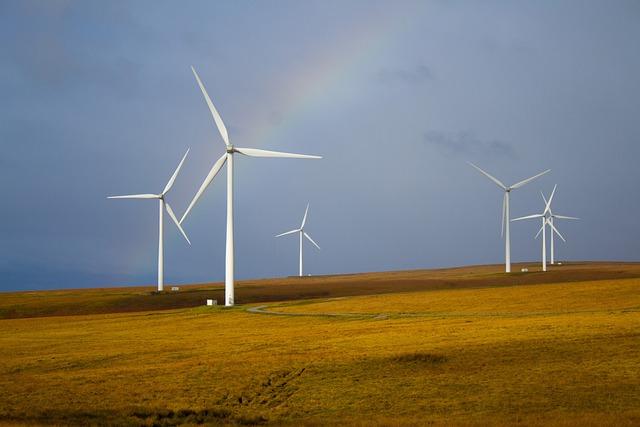 Windmill farms represent a clean-source of power generation and there is huge potential all over the world to tap into the wind resource. To increase wind-power generation, new sites must be discovered to become proposal of new projects. An ideal windmill farm site has the following characteristics:

